
Through Sunday, the city saw a jump of more than 25% in the number of homicides, reaching 295, which is 60 more than the same period a year ago, according to a review of crime statistics. Ninety-six of those occurred during a 28-day stretch that covered most of June, the statistics show.
Shooting incidents with at least one victim shot fatally or nonfatally jumped by almost 40% through Sunday, totaling 1,250.
Unrelenting gun violence continued to rattle parts of the South and West sides despite stay-at-home restrictions imposed during the COVID-19 pandemic.
And as the weather has gotten warmer and some of those guidelines were loosening, George Floyd’s death at the hands of police in Minnesota on Memorial Day sparked nationwide outrage, exacerbating an already fractured relationship between law enforcement and Black communities here, experts have said.
Many of those Chicago neighborhoods have borne the brunt of the violence in the first half of 2020, much of it fueled by frenzied weekends like the one that cost Wilson her 16-year-old son, Charles Riley.

Charles was shot and killed Saturday in the South Chicago community, along with his friend Jasean Francis, 17, after they had gone to a mall. Just an hour later, a 3-year-old boy was shot and killed on the West Side, and a 13-year-old girl was killed by a stray bullet just blocks from where the toddler was slain.
The West Side’s Harrison District, which led the city in homicides for all of 2019, is once again on pace to lead Chicago in killings. So far in 2020, Harrison is ranked first in homicides with 42, eight more than at the same point last year, official CPD statistics through Sunday show. Overall, shooting incidents in Harrison were up by 40% this year at 173, compared with 124 through the same point last year, according to the statistics.
The neighboring Austin District, where the 3-year-old, Mekhi James, was killed, saw a 56% jump in shooting incidents through Sunday with 86, a figure 31 more than last year, the statistics show. The Ogden District, which touches the West and Near Southwest sides with Little Village and North Lawndale, saw a jump as well.
In the Englewood District on the South Side, shootings were up by 68% in the first half of the year over the same period in 2019, from 73 to 123 through Sunday. Homicides increased slightly from 23 to 25, the statistics show.
Limits of the statistics
Crime experts generally caution against making year-to-year statistical comparisons, arguing that long-term trends give a better understanding of how the level of violence in a city has changed over time.
And 2020 is an outlier in terms of major news events affecting crime in major American cities, they have said.
Richard Rosenfeld, a criminologist with University of Missouri at St. Louis, cited a new study he worked on showing how the overall number of homicides in five dozen U.S. cities during the COVID-19 pandemic went down in April compared with an average over the prior three years. There was also a homicide drop in May when some cities began lifting restrictions.
Floyd’s death sparked protests in cities across the country, some of which gave way to looting and property damage, including in Chicago.
Rosenfeld said the fallout could likely contribute to the rise in violence through summer “over the three-year average.” He noted how homicide rates in some cities went up following other highly publicized deaths of other African Americans caused by white police officers, including the fatal shooting of Michael Brown by a cop in Ferguson, Missouri, in 2014 and when the video of Laquan McDonald’s fatal shooting by a Chicago police officer was released one year later.
“We’re currently in an unprecedented period of social unrest with respect to police brutality, and there’s every reason to believe we will again see a homicide rise coincide with the current period of unrest,” Rosenfeld said, adding the continued easing of coronavirus restrictions could also be a factor.
“Instead of the police withdrawing from the community, what we see, I think, is communities withdrawing even further from the police,” he said. “Not trusting the police to respond fairly or effectively, taking matters into their own hands when disputes arise or other problems emerge.”
So far in 2020, Chicago isn’t the only big city seeing spikes in violence. In New York, a city that took a big hit from the coronavirus and which also saw major civil unrest after the Floyd killing, homicides are up by 25% over last year, hitting 159 through June 14 compared with 127 in 2019.
Philadelphia has seen homicides jump by 20% through Sunday with 180, or 30 more than last year at this point. Shooting victims — people shot fatally or non-fatally — there were up 25% over the year-earlier period, according to Philadelphia police statistics.
Turbulence and leadership change
In addition to the twin challenges of COVID-19 and civil unrest after Floyd’s death, Chicago’s police force went through some of its most significant changes in the department’s history in the first half of the year.
In late January, then-interim Superintendent Charlie Beck unveiled a massive restructuring plan designed to better combat violence by moving hundreds of detectives, narcotics and gang officers under the control of deputy chiefs and commanders who oversee patrol functions. Beck also helped start a new office to carry out policing reforms required by a federal consent decree, the Office of Constitutional Policing and Reform.
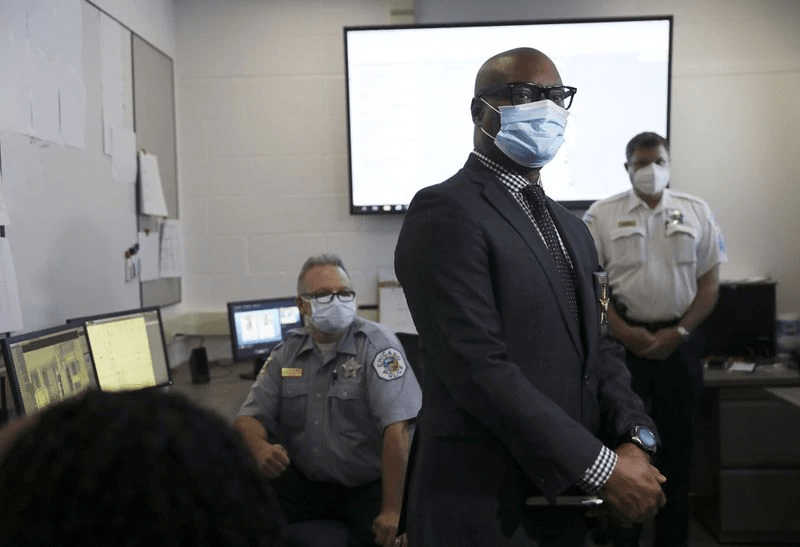
Then in April, Mayor Lori Lightfoot hired former Dallas police Chief David Brown as Beck’s permanent replacement. Though it’s only two months into his tenure, Brown’s start has been a rocky one.
 realfree.news.blog