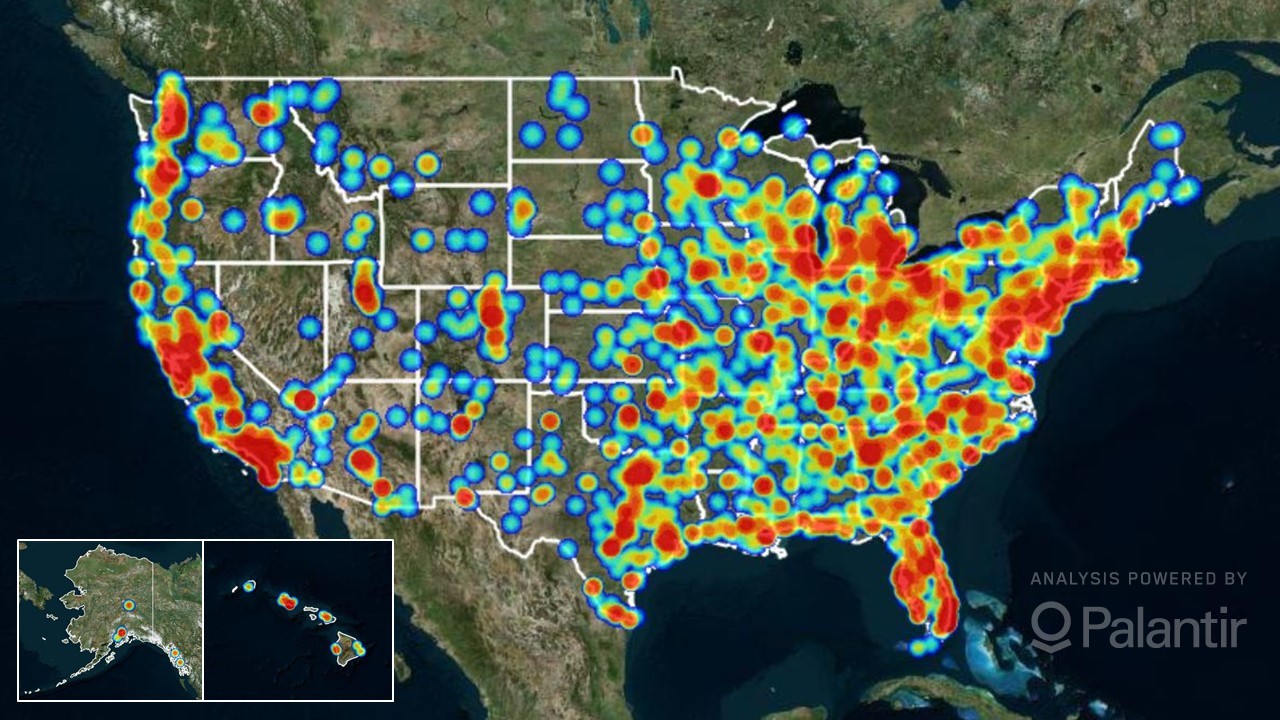
The International Labor Organization estimates that there are currently 25 million victims of human trafficking around the world. This article originally appeared as the cover story in the January/February 2020 issue of ABA Bank Compliance magazine.
Human Trafficking is Big Business
- Human trafficking earns profits of roughly $150 billion a year for traffickers, according to the ILO report from 2014. The following is a breakdown of profits, by sector:
- $99 billion from commercial sexual exploitation
- $34 billion in construction, manufacturing, mining and utilities
- $9 billion in agriculture, including forestry and fishing
- $8 billion dollars is saved annually by private households that employ domestic workers under conditions of forced labor
- While only 19% of victims are trafficked for sex, sexual exploitation earns 66% of the global profits of human trafficking. The average annual profits generated by each woman in forced sexual servitude ($100,000) is estimated to be six times more than the average profits generated by each trafficking victim worldwide ($21,800), according to the Organization for Security and Co‑operation in Europe (OSCE).
- OSCE studies show that sexual exploitation can yield a return on investment ranging from 100% to 1,000%, while an enslaved laborer can produce more than 50% profit even in less profitable markets (e.g., agricultural labor in India).
- In the Netherlands, investigators were able to calculate the profit generated by two sex traffickers from a number of victims. One trafficker earned $18,148 per month from four victims (for a total of $127,036) while the second trafficker earned $295,786 in the 14 months that three women were sexually exploited according to the OSCE.
- While sexual exploitation generates profits, forced labor saves costs. In one case, Chinese kitchen workers were paid $808 for a 78-hour work week in Germany. According to German law, a cook was entitled to earn $2,558 for a 39-hour work week according to the OSCE.
A Global Problem:
According to a September 2017 report from the International Labor Organization (ILO) and Walk Free Foundation:
- An estimated 24.9 million victims are trapped in modern-day slavery. Of these, 16 million (64%) were exploited for labor, 4.8 million (19%) were sexually exploited, and 4.1 million (17%) were exploited in state-imposed forced labor.
- Forced labor takes place in many different industries. Of the 16 million trafficking victims exploited for labor
- 7.5 million (47%) forced labor victims work in construction, manufacturing, mining, or hospitality
- 3.8 million (24%) forced labor victims are domestic workers
- 1.7 million (11%) forced labor victims work in agriculture
- 71% of trafficking victims around the world are women and girls and 29% are men and boys.
- 15.4 million victims (75%) are aged 18 or older, with the number of children under the age of 18 estimated at 5.5 million (25%).
- The Asia-pacific region accounts for the largest number of forced laborers— 15.4 million (62% of the global total). Africa has 5.7 million (23%) followed by Europe and Central Asia with 2.2 million (9%). The Americas account for 1.2 million (5%) and the Arab States account for 1% of all victims.
- Human trafficking does not always involve travel to the destination of exploitation: 2.2 million (14%) of victims of forced labor moved either internally or internationally, while 3.5 million (74%) of victims of sexual exploitation were living outside their country of residence.
- Victims spend an average of 20 months in forced labor, although this varied with different forms of forced labor.
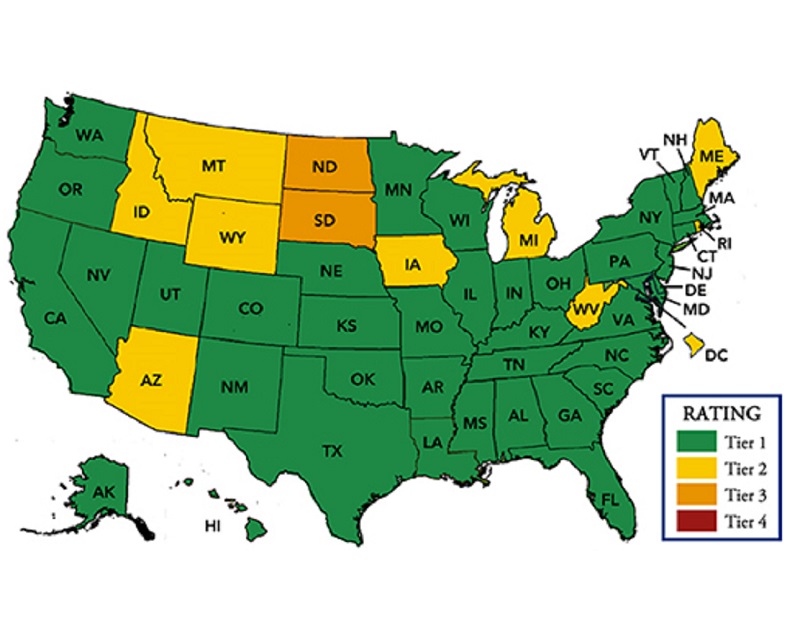
The US on Thursday listed 10 countries it said are involved in state-sponsored human trafficking, including a host of its adversaries.
Among the group are Afghanistan, China, Eritrea, Iran, North Korea, Russia, South Sudan, Syria, Turkmenistan and Venezuela.
“It’s a perversion of any government’s reason for existence: to protect rights, not crush them,” Secretary of State Mike Pompeo said while formally rolling out the annual Trafficking in Persons Report. “The United States will not stand by as any government with a policy or pattern of human trafficking subjects its own citizens to this kind of oppression.”
China, the report states, has “a government policy or pattern of widespread forced labor” that includes Beijing’s detention centers for the country’s Uighur Muslim minority in Xinjiang.
And in Afghanistan, “there was a government policy or pattern of sexual slavery in government compounds,” it said, referring to the practice of sexually enslaving young boys known locally as bacha bazi and the use of child soldiers.
The “Tier 3” group of nations also includes governments who do not fully adhere to “minimum standards and are not making significant efforts to do so.” In all, there are 19 nations on the wider lowest-level designation.Being included as a Tier 3 nation exposes a country to potential sanctions and cuts to foreign assistance.
 realfree.news.blog