
Human trafficking in Arkansas is just as bad as any other state. According to the National Human Trafficking Hotline, reports of trafficking can be found in every state including Arkansas. In fact, 121 calls from Arkansas came into the hotline last year resulting in 41 possible cases identified. … The hotline also reports 33 calls made were from victims or survivors. 2019 was a bad year for the hotline. 2020 with the coronavirus going on could possibly be worse.
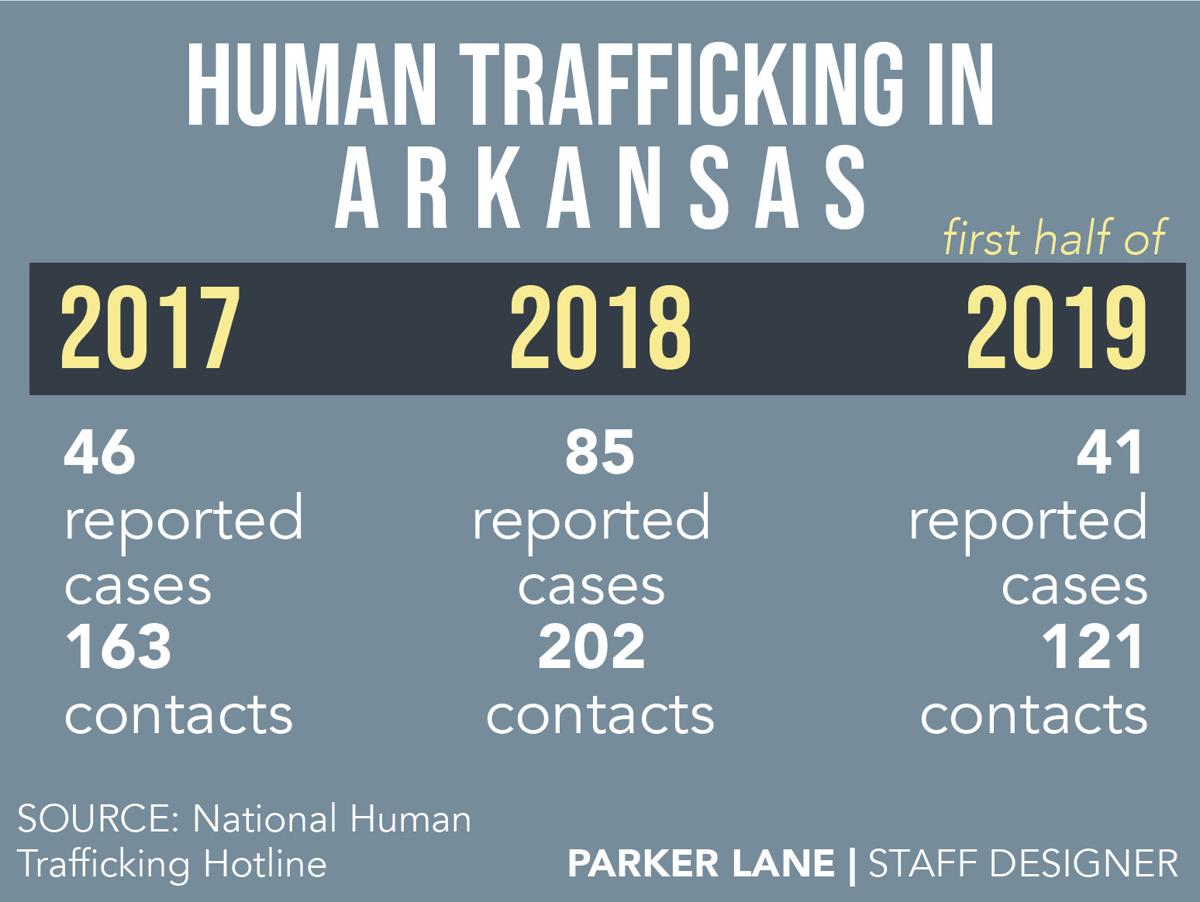
From 2006 to 2018, there were 812 calls human trafficking calls in Arkansas, leading to 203 cases filed. This year alone, at least 145 calls, leading to 42 cases of human trafficking. Thus, the number of Arkansas human trafficking cases being reported in on the increase.
How many people go missing in Arkansas a year you ask? Arkansas has more than 500 unsolved missing persons cases, with those missing ranging from ages 2 to 99.
Human trafficking is a form of modern-day slavery in which traffickers use force, fraud, or coercion to control victims for the purpose of engaging in commercial sex acts or labor services against his/her will. Human trafficking affects individuals across the world, including here in the United States and is commonly regarded as one of the most pressing human rights issues of our time. Human trafficking affects every community in the United States across age, gender, ethnicity, and socio-economic backgrounds.
Never confront a suspected trafficker or victim directly. You could be putting yours and the victim’s safety at serious risk. Contact local law enforcement
According to the Department of State, the top three states with the most human trafficking activity are California, New York and Texas. California Against Slavery reported that three of the 10 worst child sex trafficking areas in the United States are San Francisco, Los Angeles and San Diego.
Sex trafficking has increased in our area due to instability caused by COVID-19, according to area non-profit Hub of HOPE.
“Despite COVID-19, trafficking continues,” said Jenny Sorey, founder and executive director of Hub of HOPE. “We would estimate that it is actually increasing, simply because of the nature of trafficking. We know that it has a direct relationship with poverty and addiction, and are we not seeing an increase of poverty or an increase of a need for financial stability?”
“Having those great needs and being in a situation where they are at high risk, their vulnerability is increased. A traffickers pleas, a traffickers grooming tactics are going to be hard to dismiss because the promises are very good, but they’re very empty,” Sorey said. “They’re promised love or attention, companionship — who doesn’t want companionship during COVID time, right? — and so many people really lend their ear to those, really, lies, empty promises of a trafficker, and find themselves then caught in sex trafficking.”
 realfree.news.blog