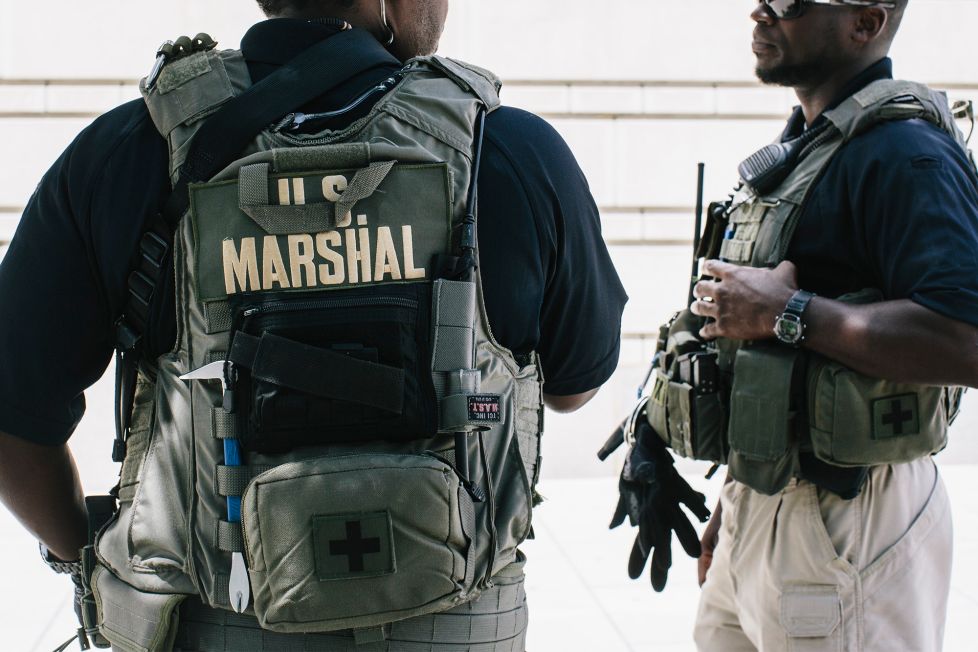
RAW VIDEO: Sniper Shot .50 Caliber Round Through Engine Block Of Semi To End WILD Pursuit In Cincinnati! https://t.co/rKAyWkJFEj
Human trafficking in Ohio The scary truth
An estimated 2,879 native Ohio adolescents are at risk for sex trafficking and another 1,078 have been trafficked into the sex trade over the course of a year. Approximately 18% of Ohio’s victims said they became involved in the sex trade before age 18 and 10% said they became involved before age 12.
Ohio is particularly vulnerable to human trafficking because it has both large urban centers and rural counties and a large transient and immigrant population, as well as five major highways with easy access to other states and Canada. … 1,032 Ohio children are victims of human sex trafficking every year.
SANDUSKY — The vast majority of children reported missing in Ohio last year were found safe. In 2018, 19,879 children were reported missing, according to the 2018 Ohio Missing Children Clearinghouse Report, conducted by the Ohio Attorney General’s Office.
Ohio ranked as one of worst states in nation for human trafficking. MIAMI VALLEY, Ohio (WKEF/WRGT/WKRC) – A recent report said Ohio ranks fourth in the nation for human trafficking. … Executive Director Cheryl Oliver said the average age for human trafficking to start is 13 for girls, and 11 for boys.
How to keep your child safe from human sex trafficking. Avoid unsafe situations. You should avoid traveling alone, at night, or on deserted side streets. If you think you are being followed, find a crowded place. Don’t hesitate to alert police to your suspicions, and give friends and family members a description of the potential perpetrator.
Human trafficking is one of the fastest growing criminal industries in the world. Annually, the money illegally acquired through human trafficking is estimated to be more than $35 billion, which equals the profits earned by Starbucks, Google and Nike combined.
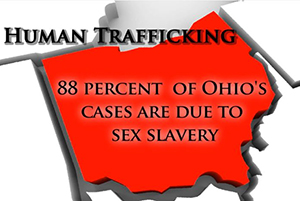
U.S. Human Traffickers use violence, threats, deception, debt bondage, and other manipulative tactics to force people to engage in commercial sex or to provide labor or services against their will. Victims of human trafficking include children and adults age 18 or over who are coerced or deceived into commercial sex acts, and anyone forced into different forms of “labor or services,” such as domestic workers held in a home, or farm-workers forced to labor against their will.
This illegal multi-million dollar industry has largely been hidden in the shadows, but human trafficking cases have been reported in all 50 states. Ohio has ranked as high as fifth among all states in total reported human trafficking cases with Toledo being identified as the fourth highest ranking city in the nation for recruiting victims into the illegal trade.
Video shows father & daughter viciously beaten in Manhattan bodega attack,
Trump administration to stand down

The United Nations just ordered the Trump administration to stand down in Portland!
This is what we have been warning about.
For over a month, the United Nations has been carrying out a ‘human rights investigation’ against the United States. First, they were investigating the US over “systemic racism.” They ordered the United States to crack down on police officers, otherwise the UN would mount an intervention. Yes, this is really what the UN Human Rights Council said last month…
When they learned that only 9 unarmed black people were shot by police last year, and of them, only two were not in the process of attacking a police officer or bystander, the UN shifted their strategy. They realized that they cannot launch a blue-helmet intervention on such a flimsy basis.
2020 included spike in shootings and homicides in Chicago

Through Sunday, the city saw a jump of more than 25% in the number of homicides, reaching 295, which is 60 more than the same period a year ago, according to a review of crime statistics. Ninety-six of those occurred during a 28-day stretch that covered most of June, the statistics show.
Shooting incidents with at least one victim shot fatally or nonfatally jumped by almost 40% through Sunday, totaling 1,250.
Unrelenting gun violence continued to rattle parts of the South and West sides despite stay-at-home restrictions imposed during the COVID-19 pandemic.
And as the weather has gotten warmer and some of those guidelines were loosening, George Floyd’s death at the hands of police in Minnesota on Memorial Day sparked nationwide outrage, exacerbating an already fractured relationship between law enforcement and Black communities here, experts have said.
Many of those Chicago neighborhoods have borne the brunt of the violence in the first half of 2020, much of it fueled by frenzied weekends like the one that cost Wilson her 16-year-old son, Charles Riley.

Charles was shot and killed Saturday in the South Chicago community, along with his friend Jasean Francis, 17, after they had gone to a mall. Just an hour later, a 3-year-old boy was shot and killed on the West Side, and a 13-year-old girl was killed by a stray bullet just blocks from where the toddler was slain.
The West Side’s Harrison District, which led the city in homicides for all of 2019, is once again on pace to lead Chicago in killings. So far in 2020, Harrison is ranked first in homicides with 42, eight more than at the same point last year, official CPD statistics through Sunday show. Overall, shooting incidents in Harrison were up by 40% this year at 173, compared with 124 through the same point last year, according to the statistics.
The neighboring Austin District, where the 3-year-old, Mekhi James, was killed, saw a 56% jump in shooting incidents through Sunday with 86, a figure 31 more than last year, the statistics show. The Ogden District, which touches the West and Near Southwest sides with Little Village and North Lawndale, saw a jump as well.
In the Englewood District on the South Side, shootings were up by 68% in the first half of the year over the same period in 2019, from 73 to 123 through Sunday. Homicides increased slightly from 23 to 25, the statistics show.
Limits of the statistics
Crime experts generally caution against making year-to-year statistical comparisons, arguing that long-term trends give a better understanding of how the level of violence in a city has changed over time.
And 2020 is an outlier in terms of major news events affecting crime in major American cities, they have said.
Richard Rosenfeld, a criminologist with University of Missouri at St. Louis, cited a new study he worked on showing how the overall number of homicides in five dozen U.S. cities during the COVID-19 pandemic went down in April compared with an average over the prior three years. There was also a homicide drop in May when some cities began lifting restrictions.
Floyd’s death sparked protests in cities across the country, some of which gave way to looting and property damage, including in Chicago.
Rosenfeld said the fallout could likely contribute to the rise in violence through summer “over the three-year average.” He noted how homicide rates in some cities went up following other highly publicized deaths of other African Americans caused by white police officers, including the fatal shooting of Michael Brown by a cop in Ferguson, Missouri, in 2014 and when the video of Laquan McDonald’s fatal shooting by a Chicago police officer was released one year later.
“We’re currently in an unprecedented period of social unrest with respect to police brutality, and there’s every reason to believe we will again see a homicide rise coincide with the current period of unrest,” Rosenfeld said, adding the continued easing of coronavirus restrictions could also be a factor.
“Instead of the police withdrawing from the community, what we see, I think, is communities withdrawing even further from the police,” he said. “Not trusting the police to respond fairly or effectively, taking matters into their own hands when disputes arise or other problems emerge.”
So far in 2020, Chicago isn’t the only big city seeing spikes in violence. In New York, a city that took a big hit from the coronavirus and which also saw major civil unrest after the Floyd killing, homicides are up by 25% over last year, hitting 159 through June 14 compared with 127 in 2019.
Philadelphia has seen homicides jump by 20% through Sunday with 180, or 30 more than last year at this point. Shooting victims — people shot fatally or non-fatally — there were up 25% over the year-earlier period, according to Philadelphia police statistics.
Turbulence and leadership change
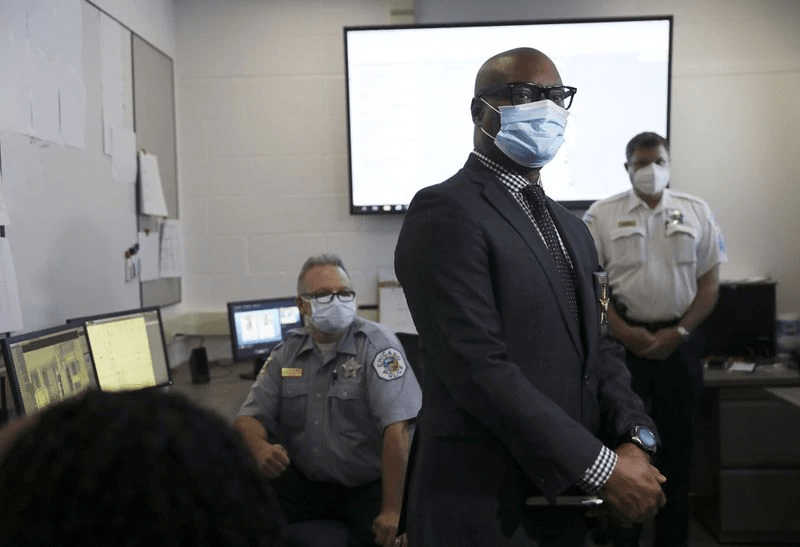
In addition to the twin challenges of COVID-19 and civil unrest after Floyd’s death, Chicago’s police force went through some of its most significant changes in the department’s history in the first half of the year.
In late January, then-interim Superintendent Charlie Beck unveiled a massive restructuring plan designed to better combat violence by moving hundreds of detectives, narcotics and gang officers under the control of deputy chiefs and commanders who oversee patrol functions. Beck also helped start a new office to carry out policing reforms required by a federal consent decree, the Office of Constitutional Policing and Reform.
Then in April, Mayor Lori Lightfoot hired former Dallas police Chief David Brown as Beck’s permanent replacement. Though it’s only two months into his tenure, Brown’s start has been a rocky one.
Utica police looking for man in connection to mask-related assault at restaurant
 realfree.news.blog